Cherry Distillate
Kirschwasser
The Clear Spirit of Swiss Cherry Orchards
This website contains information about alcoholic beverages. You must be of legal drinking age in your country of residence to continue browsing. Alcohol should be consumed responsibly and in moderation. Do not drink and drive.
Introduction
Kirschwasser — literally “cherry water” in German — is a clear, unaged fruit brandy distilled from the fermented juice of small, sour Morello cherries. It is one of the defining spirits of German-speaking Switzerland and a cornerstone of central European distillation heritage.
Unlike many fruit spirits that are sweetened or macerated, authentic Kirschwasser is dry and unsweetened. Its clarity is intentional: the spirit undergoes no barrel ageing, preserving the full, raw aromatic spectrum of the cherry.
Geography and Origin
The heartland of Swiss Kirschwasser production is concentrated in the cantons of Zug and Schwyz, situated in central Switzerland south of Zurich. The pre-Alpine climate here — cool winters, warm summers, and mineral-rich soils — produces Morello cherries of exceptional quality: small, intensely flavoured, and high in natural acids.
The town of Zug in particular has been associated with Kirschwasser production since the sixteenth century. Historical records from that era document both the cultivation of cherry orchards and the operation of small distilleries attached to farms and monasteries.
Production also extends into adjacent cantons including Aargau, Lucerne, and Berne, where orchard traditions remain active and where local variants of the spirit carry subtle differences in character depending on the cherry variety and elevation of the harvest.
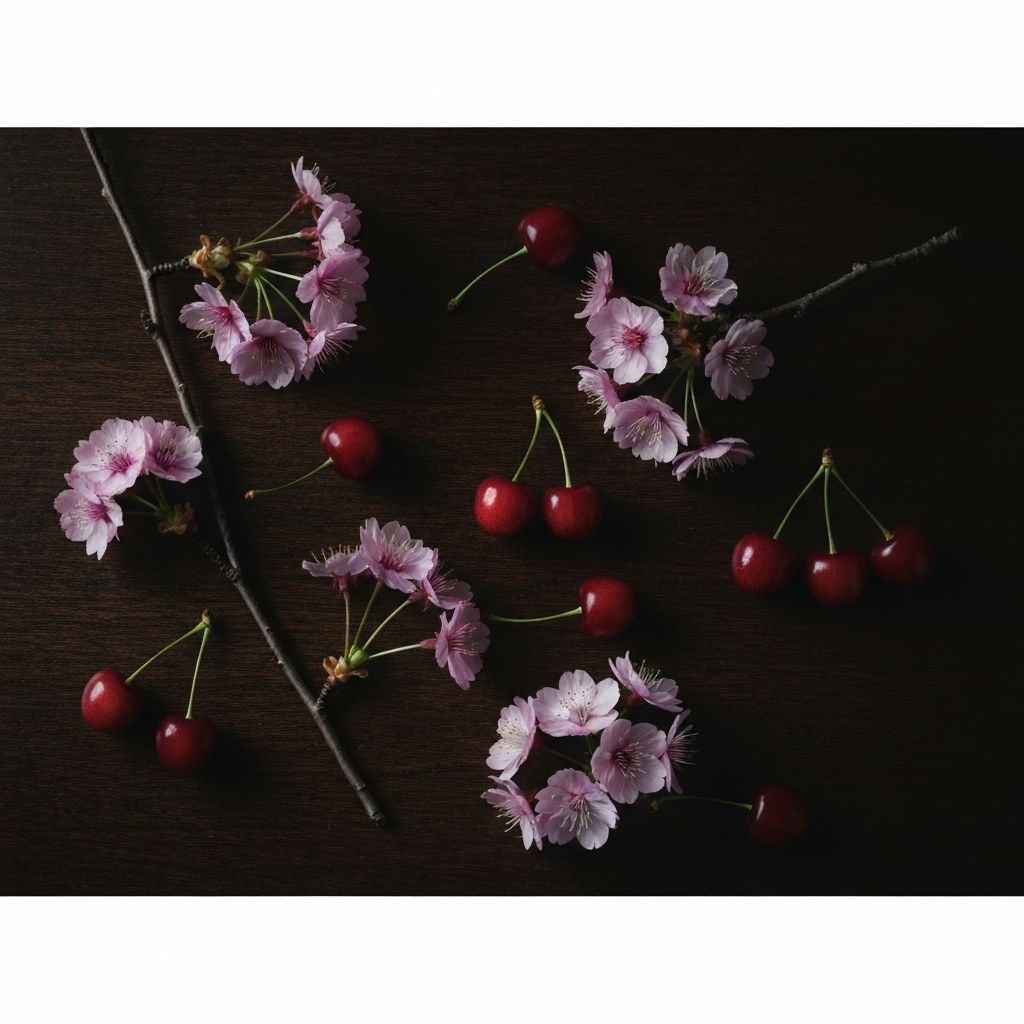
Morello cherry orchards in the Zug canton — the historic centre of Swiss Kirschwasser production.
The Cherry — Raw Material and Fermentation
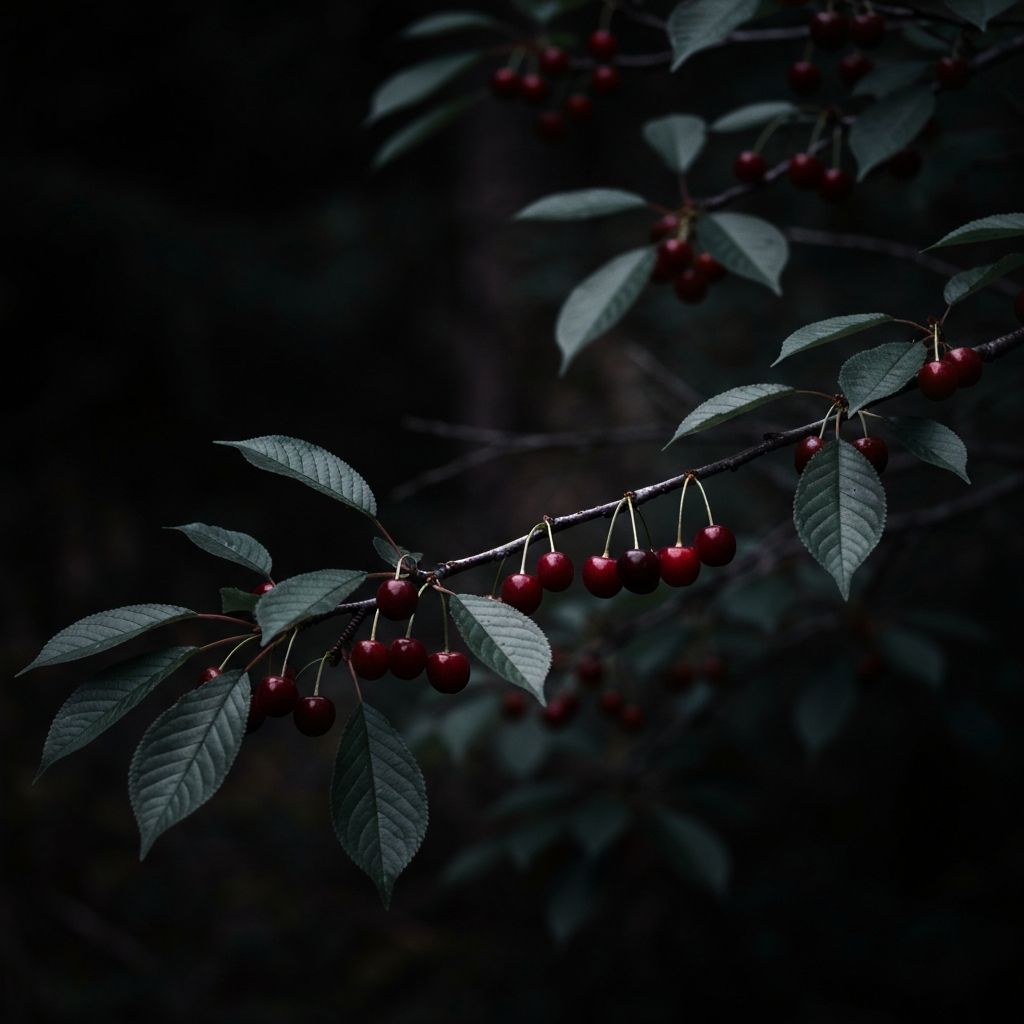
The Morello cherry (Prunus cerasus) — known locally as Sauerkirsche or Weichsel — is the primary variety used in authentic Kirschwasser production. These cherries are characterised by a high acid content, deep red flesh, and a naturally occurring concentration of aromatic compounds that survive the fermentation and distillation process intact.
Harvest takes place in late June and July, when the cherries reach full ripeness. Traditional producers crush the entire fruit — including the stone — before fermentation begins. This is a critical step: the crushed kernels release benzaldehyde and hydrogen cyanide precursors (amygdalin), which convert during fermentation into aromatic compounds that give the finished spirit its characteristic subtle almond note.
Fermentation lasts between two and six weeks, depending on ambient temperature and the sugar content of the fruit. No additional sugar is introduced in authentic production. The fermented mash — Maische — is then transferred to the still.
Distillation
Kirschwasser is typically produced using a pot still (Brennblase), run twice in the traditional double-distillation method. The first distillation — the Rohbrand — produces a low-strength distillate of roughly 25–30% ABV containing the full range of volatile compounds from the mash.
The second distillation — the Feinbrand — concentrates the spirit and requires the distiller to carefully separate the head (Vorlauf), heart (Mittellauf), and tail (Nachlauf) fractions. The heart fraction, which forms the basis of the finished Kirschwasser, typically comes off the still at 65–75% ABV before being reduced to the bottling strength with pure water.
Bottling strength for Swiss Kirschwasser traditionally ranges from 40% to 50% ABV. Premium expressions often reach the upper end of this range, where the aromatic density is greatest.
Alcohol Content
45–50% ABV
Traditional Swiss Kirschwasser reaches 45–50% ABV. This strength is considered optimal for aroma expression and the characteristic long, warming finish.
Flavour Profile
On the nose, authentic Kirschwasser presents a clean, bright cherry aroma — not the sweet, jammy character of macerated cherry liqueurs, but the crisp, almost tart scent of the raw fruit. Beneath this is the subtle but distinct almond-like note derived from the cherry stone — the defining characteristic of the spirit.
The palate is dry, with moderate intensity. The cherry fruit is present but restrained; the spirit does not attempt to replicate the flavour of eating a cherry — it distils the essence. There is a gentle warmth from the alcohol, and a clean, slightly mineral finish that reflects the Alpine water used for reduction.
Nose
Fresh cherry, almond, stone fruit, subtle floral hints
Palate
Dry, bright cherry, mineral, gentle warmth
Finish
Clean, long, almond kernel, slightly herbal
Tradition and Serving
Kirschwasser is traditionally consumed as a digestif — served in a small tulip-shaped glass at room temperature, after a meal. The Swiss tradition discourages serving it chilled, as low temperatures mute the aromatic complexity that makes the spirit distinctive.
In cooking, Kirschwasser plays an indispensable role in two iconic preparations: Swiss cheese fondue — where a small measure is added to the melting pot to add depth and prevent the cheese from becoming stringy — and the Black Forest cake (Schwarzwälder Kirschtorte), where it saturates the sponge layers and flavours the cream.
During the cherry harvest season in central Switzerland, it is common for farmhouses and small producers to share an informal glass of the freshly distilled spirit — a practice that maintains the social dimension of the craft and connects the drink to its agricultural roots.
Legal Designation and Protection
Swiss Kirschwasser is regulated under Swiss federal spirits law, which defines minimum production standards, permitted ingredients, and the prohibition of artificial flavourings or colourings. The spirit must be distilled from fermented cherry must and cannot be sweetened.
The designation “Zuger Kirschwasser” — named after the canton of Zug — carries additional geographical recognition, indicating a spirit produced within the canton from locally grown Morello cherries according to traditional methods.